

Blog
Practical Guide to Automotive Lead Funnels

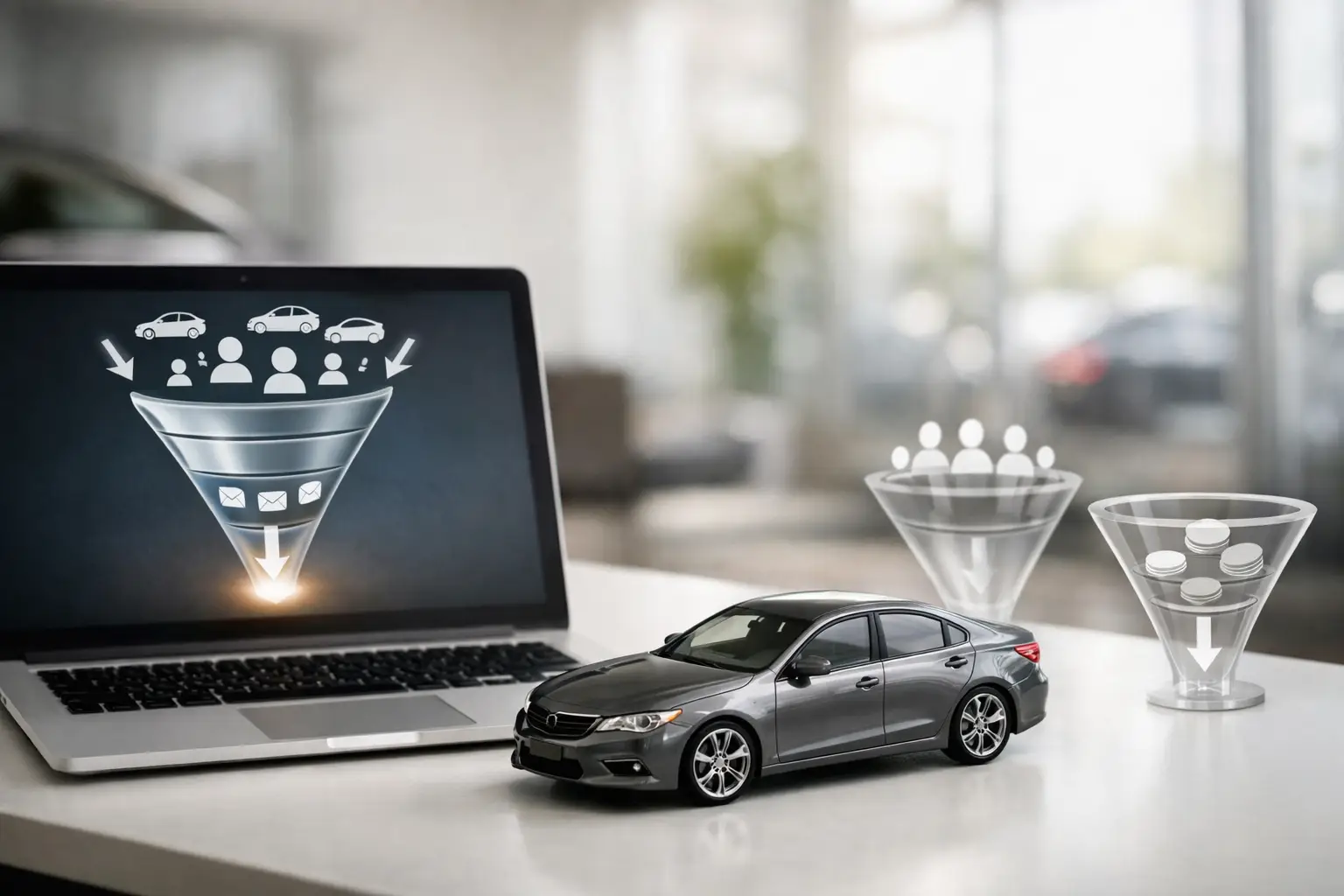
A shopper who requests a payment estimate at 9:15 p.m. is not the same lead as a fleet manager asking for a quote at 10:00 a.m. The first may still be comparing vehicles, while the second may be ready to discuss volume, availability, and terms. A useful guide to automotive lead funnels starts with that distinction: leads should not all receive the same message, timing, or next step.
An automotive lead funnel is the path from first interest to a completed sale, service appointment, financing application, trade-in conversation, or other meaningful business outcome. It is not just a form on a website. It includes where the lead came from, what information they provided, how quickly someone responds, and whether the follow-up matches what they were trying to accomplish.
What an Automotive Lead Funnel Should Do
The purpose of a funnel is to make the buying process easier to manage for both the customer and the business. Instead of treating every inquiry as a cold prospect, the funnel gives each lead a practical route forward.
At the top of the funnel, people may be researching a vehicle type, checking available inventory, reading about financing, or looking for repair information. Their interest is real, but their purchase timeline may be uncertain. Mid-funnel prospects typically compare options, ask for pricing, value a trade-in, or request a test drive. Near the bottom, buyers want a direct conversation, a confirmed appointment, documentation, or a final quote.
A good funnel does not force every visitor into a sales call. It offers an appropriate next action. For a person reading about towing capacity, that might be a vehicle comparison or availability alert. For someone who has selected a specific vehicle and submitted contact details, the next action should be a prompt, informed response from a real person.
Build the Funnel Around Clear Customer Intent
Start by defining the conversion events that matter to your automotive business. A dealer focused on retail vehicle sales may prioritize test-drive requests, quote requests, finance applications, and trade-in valuations. A repair shop may focus on appointment requests, phone calls, and service estimate forms. A parts or equipment business may need to capture product inquiries, fitment questions, and commercial account requests.
The funnel should reflect the actual sales process. If your team cannot realistically respond to a full financing application within minutes, do not make that the only form of conversion. A shorter form that asks for a name, phone number, email, vehicle interest, and preferred contact method can create a more manageable starting point.
There is a trade-off between collecting detail and reducing friction. Longer forms can help sales teams qualify leads, but each additional field can reduce completion rates. For many first-touch inquiries, collect only what is needed to begin a useful conversation. Ask for more information after the prospect has received value or shown stronger buying intent.
Match Landing Pages to the Source
A lead from a paid ad for a specific used truck should arrive on a page about that truck or a closely related inventory category. Sending that person to a general homepage creates unnecessary work. They have to search again, and the business loses context about what prompted the inquiry.
The same principle applies to social media, email campaigns, local listings, and referral sources. Each page should make the offer clear, provide enough information to support the next step, and include one primary call to action. Too many competing buttons can make a visitor hesitate.
For example, an inventory page might feature a request-for-information form and a call option. A service page might lead with appointment scheduling. A commercial vehicle page may need a quote form that includes business name, fleet size, and preferred vehicle type. The best setup depends on the transaction, not on a single universal template.
Capture Leads Without Making Them Work Too Hard
The conversion point needs to feel useful. “Contact us” is broad and easy to ignore. “Check availability,” “Request a trade-in estimate,” “Schedule service,” or “Get a monthly payment estimate” tells the visitor what they receive in return.
Keep form instructions direct. Explain when the customer can expect a response and offer a choice of contact method where possible. Some buyers prefer a phone call. Others want a text or email because they are still early in their research. Respecting that preference can improve response rates and reduce frustration.
Trust signals also matter, particularly when a form asks for financial or personal details. Use clear privacy language, accurate business contact information, and realistic promises. Avoid saying that a vehicle is guaranteed available unless inventory data is current enough to support that claim.
Phone calls remain valuable in automotive sales, but they should be tracked as part of the funnel. If calls, web forms, text messages, chat requests, and walk-in appointments live in separate systems, it becomes difficult to see which marketing efforts produce qualified opportunities.
Respond Fast, Then Follow Up With Context
Speed matters because vehicle shoppers often submit inquiries to more than one business. A first response within minutes is usually better than a response the next day, but quick is not enough if the message is generic. A reply should confirm the specific vehicle, service, or request that brought the person in.
A strong first response can be brief: acknowledge the inquiry, answer the available question, state the next practical step, and ask one relevant follow-up question. If someone asked about a vehicle, confirm availability or explain the current status. If they requested service, offer the nearest appointment openings. If they submitted a trade-in request, explain what details or inspection are needed for a more accurate value.
Automation can help with acknowledgment messages, appointment reminders, and routine follow-up. It should not replace judgment. A customer who asks a detailed question about mileage, towing equipment, or warranty coverage should not receive a generic promotional email that ignores the question.
Follow-up cadence also depends on lead quality and stated preference. A customer asking for a same-day test drive may need a call and text quickly. A person who downloaded a buying checklist may be better served by a useful email sequence over several days. Repeated messages without new information can damage trust, especially when the customer has already said they are not ready.
Qualify Leads So Sales Effort Goes Where It Matters
Lead qualification is not about dismissing people who are early in the process. It is about understanding what kind of help they need and how likely they are to move forward soon.
Useful qualification details include the vehicle or service requested, desired timeline, trade-in status, budget range when volunteered, financing needs, location, and preferred contact channel. For commercial inquiries, ask about intended use, quantity, delivery timing, and purchasing authority.
A simple lead scoring approach can help teams prioritize work. High-intent actions, such as a test-drive request or a call about a specific stock number, should be handled differently from a newsletter signup or general brochure download. Do not treat scoring as a substitute for conversation. A buyer can look low-intent in a system while being ready to purchase after one timely answer.
Measure the Funnel Beyond Form Submissions
A funnel that generates many leads but few appointments or sales may have a traffic problem, a follow-up problem, or an offer problem. Track the stages that show where prospects stop moving forward.
At a minimum, review lead source, form completion rate, response time, contact rate, appointment rate, show rate, close rate, and cost per sale. For service businesses, measure booked appointments, completed repair orders, average repair value, and returning customers. These numbers are more useful together than in isolation.
Source quality often differs sharply. One campaign may deliver fewer leads but more qualified appointments. Another may create a large volume of form submissions from people who cannot be reached. Cutting the second campaign too quickly is not always the right move, but it should not be judged on lead count alone.
Review lost leads as well. If customers regularly say they found a better price, could not get a response, or learned the vehicle was unavailable, those patterns point to specific funnel repairs. If prospects disappear after receiving a payment quote, the quote may need clearer assumptions or a more helpful explanation.
Keep Improving the Automotive Lead Funnel
The most effective funnel is usually built through small, measured changes rather than a full rebuild every quarter. Test one element at a time, such as a shorter form, a different call to action, faster first response, or an appointment-focused follow-up message. Give the change enough time and enough lead volume to produce a meaningful result.
Sales staff should be part of this process. They hear the questions, objections, and confusion that analytics cannot fully explain. Marketing data may show that a page converts poorly; the sales team may reveal that visitors are asking for information the page never provides.
A lead funnel works best when it feels less like a system for collecting contact information and more like a clear path for helping someone make a vehicle decision. When every step answers the customer’s next question, better leads tend to follow.
2 thoughts on “Practical Guide to Automotive Lead Funnels”